No. 025 · 23 September 2026
DYMO × Marimekko
Tapewriter M-66 Unikko, embossing label maker, 1966
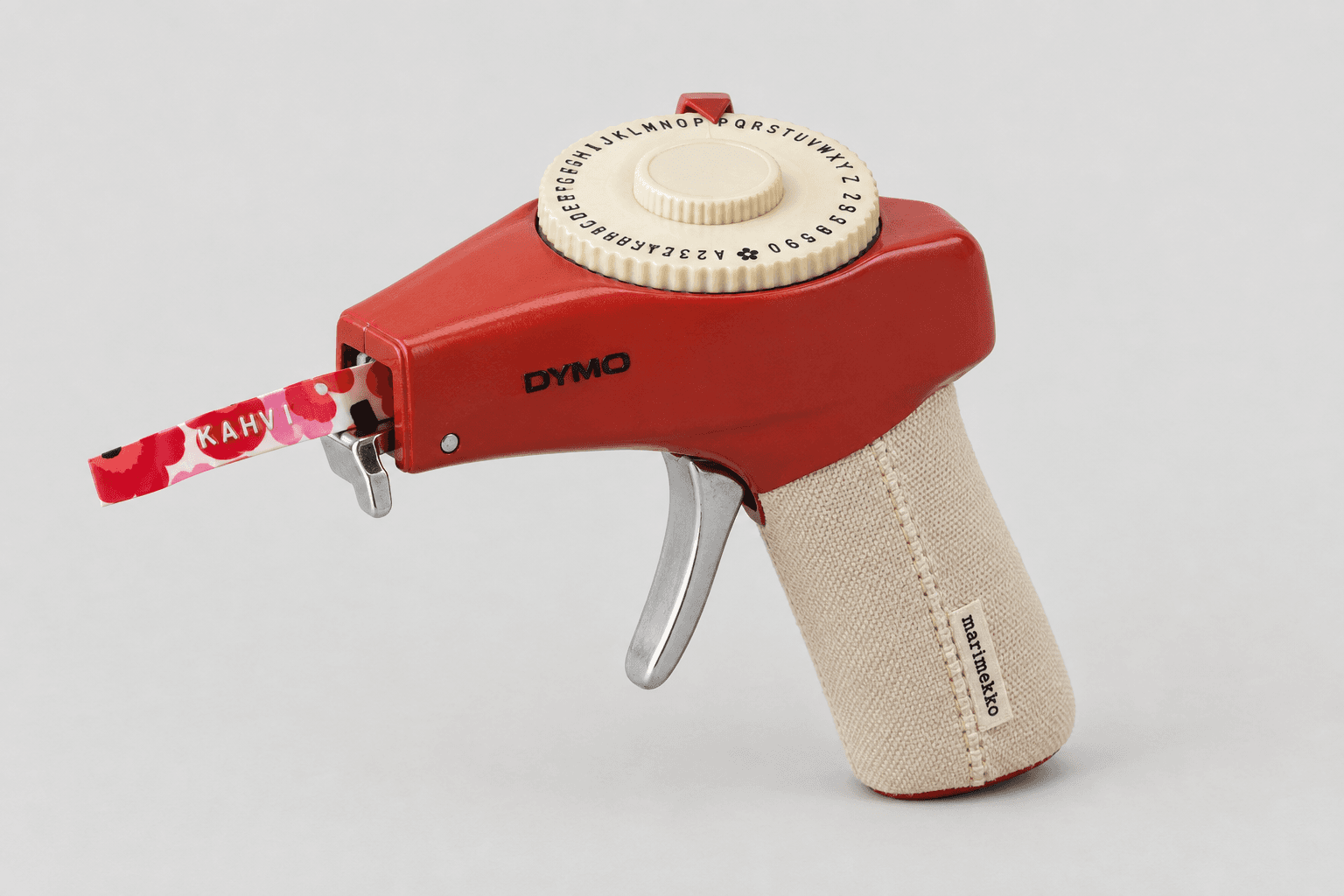
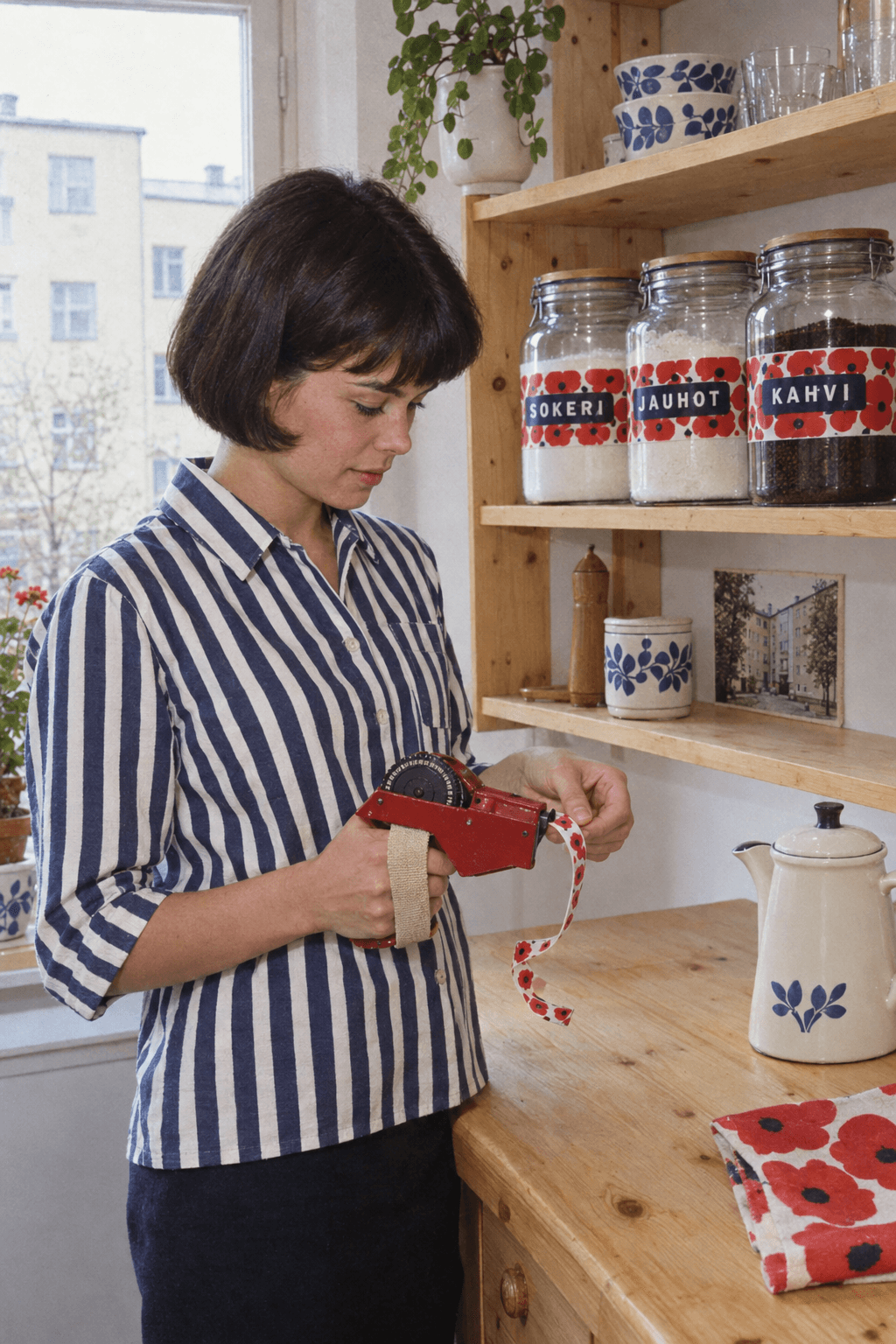
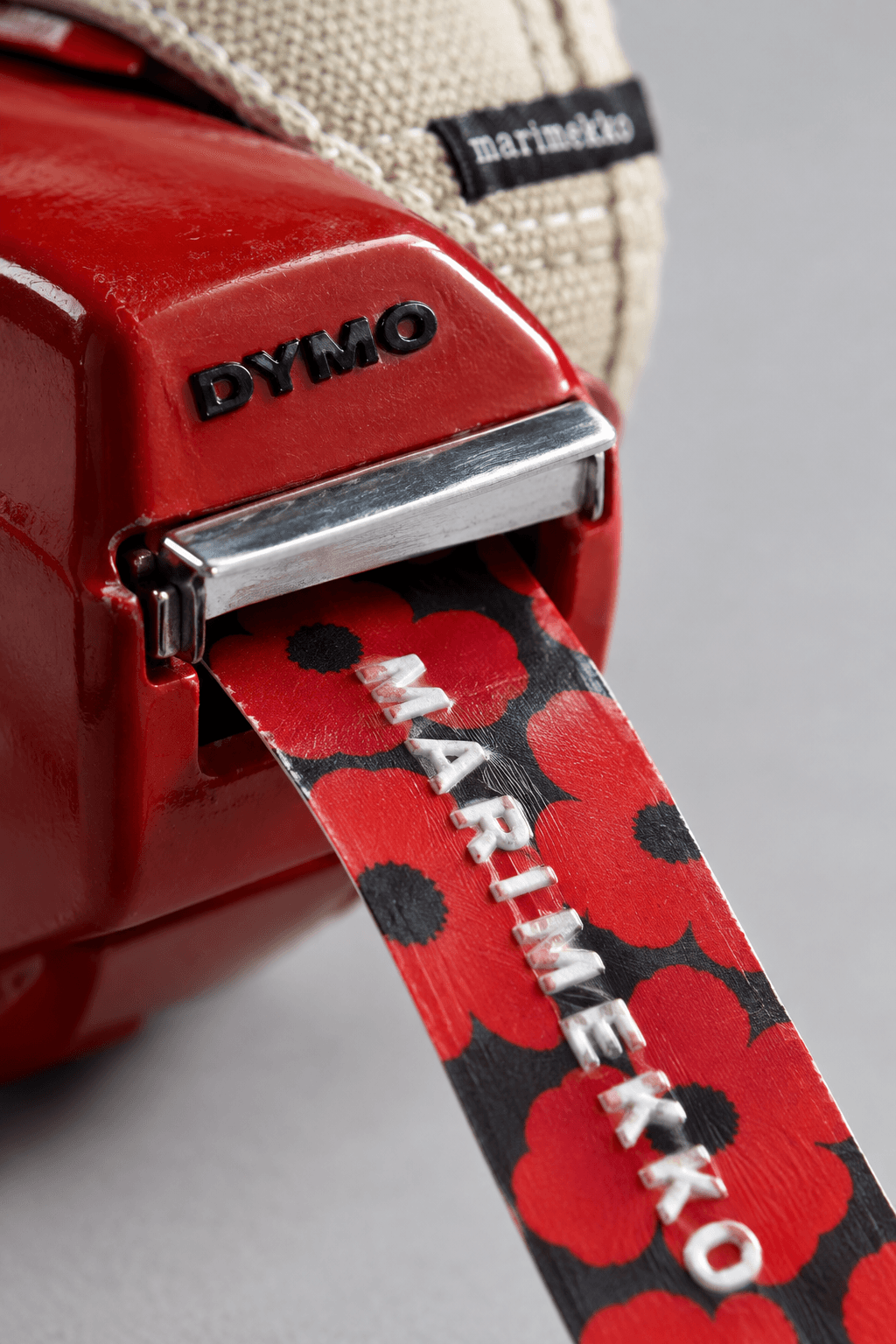
The embossing die turns the letters white as it presses them, so every label you punch writes itself in white through a field of Maija Isola's poppies.
Announced April 19, 1966, at Marimekko's shop on Pohjoisesplanadi, the Tapewriter M-66 Unikko began as a letter from Armi Ratia to DYMO Industries in Berkeley, asking why the office should be the only room in the house without a pattern. DYMO had spent eight years selling the same pistol-grip embosser in black and grey. Ratia wanted one her staff would not hide in a drawer.
The work was split cleanly. DYMO's Berkeley engineering group, led by product designer Harold Esterly, kept the proven mechanism: a rotating character wheel, a squeeze trigger and a cutter lever. Marimekko's side was handled by Annika Rimala with Maija Isola supervising the tape. The key decision was to print Isola's Unikko poppy onto the vinyl tape itself. DYMO tape stress-whitens where it is embossed, so the raised letters come up chalk white through the red, black and pink flowers. Early samples lost the whitening on dark ink, which is why the finished tapes use a thinned, slightly translucent print.
The body was pressed steel finished in a flat Marimekko red enamel, with a cream moulded character wheel and a grip wrapped in a band of unbleached cotton canvas, stitched at the Marimekko works in Herttoniemi. The wheel carried 49 characters including Å, Ä and Ö, and in place of the ampersand it had a tiny five-petal poppy, which owners used to decorate jam jars, school files and the spines of record sleeves.
Reception in Finland was warm and in the United States puzzled. Design magazine Form Function Finland praised it as a tool that looked like it had been invited, while an American trade buyer reportedly asked whether the flowers were optional. Ratia gave one to every guest at her 1966 midsummer gathering at Bökars, each loaded with a tape already reading the guest's name.